The digitization of healthcare — including telemedicine, electronic health records, patient portals, AI decision support, and health applications — promises more accessible, efficient, and personalized care. However, these technologies also risk deepening existing inequalities when access, digital skills, affordability, and usability are uneven.
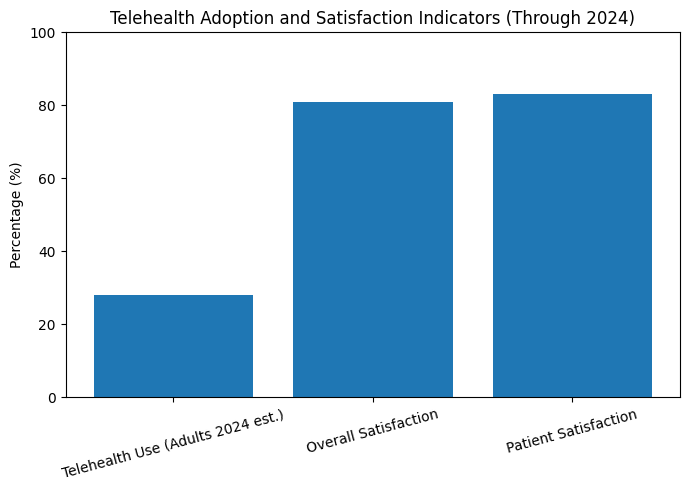
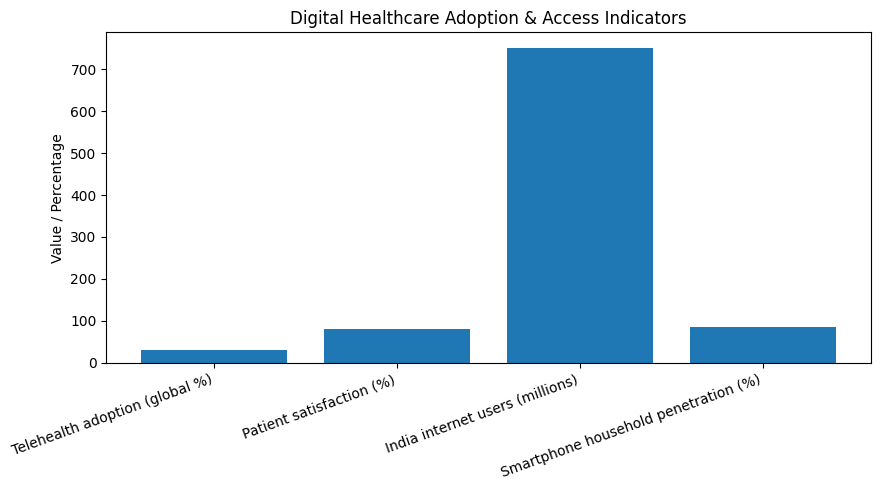
This paper synthesizes global and India-specific evidence to quantify digital health adoption, identify drivers of unequal uptake, and assess impacts on patient outcomes. Evidence suggests telehealth continues to be used by a substantial minority of adults (20–39% in many countries post-pandemic), while patient satisfaction remains high (~80% overall).
In parallel, internet and smartphone penetration in India has grown rapidly (700M+ users; smartphone household penetration ≈85.5%), yet meaningful gaps persist across rural/urban, older/younger, and low/high socioeconomic groups.
We present a conceptual model linking digital access and literacy to downstream health outcomes, analyze benefits and risks of accelerated digitalization, and propose an equity-centered roadmap. Recommendations include low-bandwidth design, assisted navigation, community literacy programs, targeted subsidies, and integrated offline workflows to ensure inclusion.
Primary sources include DataReportal, telehealth systematic reviews, national utilization analyses, and the WHO digital health strategy.
EXPLICITY
Digital health adoption trends
EXPLICITY
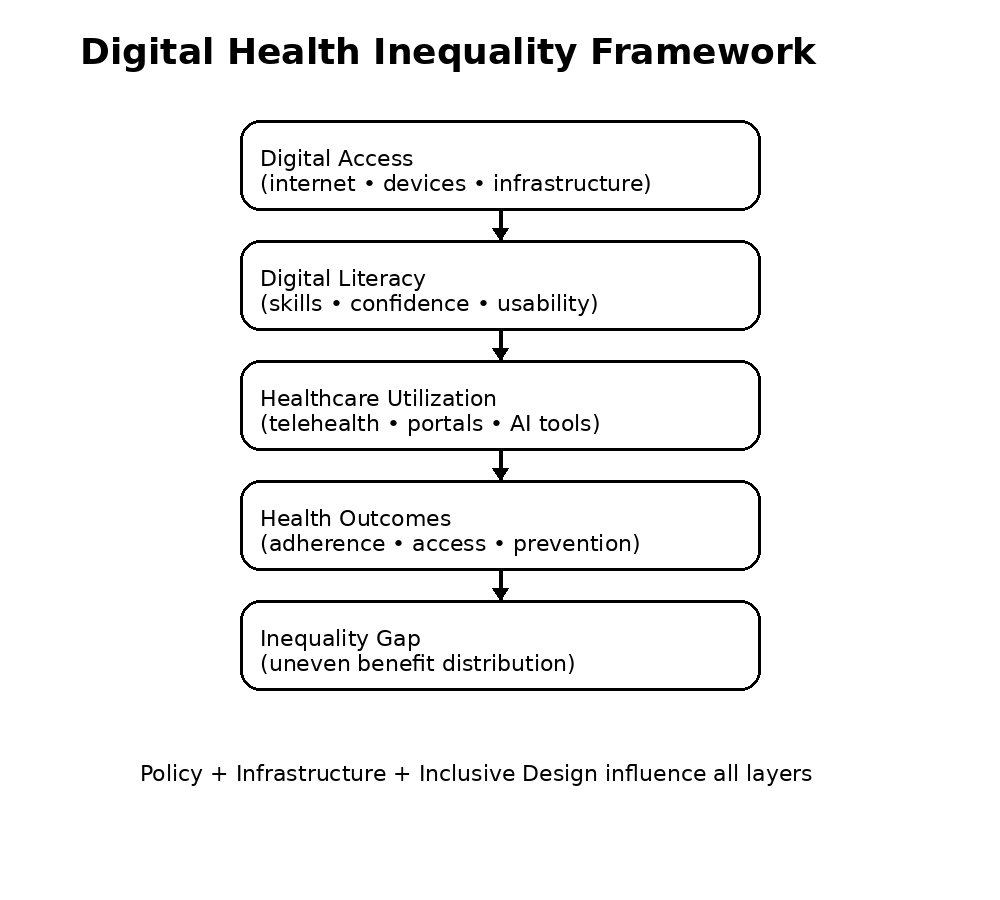
Digital access inequality model
Introduction
Digital technologies now occupy a central role in healthcare delivery. Teleconsultations, remote monitoring systems, electronic health records, and AI-assisted decision tools are no longer experimental — they form part of routine clinical infrastructure. The COVID-19 pandemic accelerated this transition, transforming previously marginal digital services into a mainstream mode of care and permanently reshaping clinical pathways.
Yet the promise of digital democratization is conditional. Its benefits materialize only when individuals can access, afford, and effectively use these systems. Where connectivity, affordability, or digital literacy are uneven, innovation risks reinforcing structural inequality rather than expanding care. Digital infrastructure alone does not guarantee equity; usability and inclusion are equally decisive.
This paper examines how digital transformation interacts with existing social determinants to shape healthcare inequality. We synthesize evidence on adoption patterns, patient satisfaction, structural barriers, and measurable outcomes; quantify key indicators of access and engagement; and propose design, policy, and programmatic strategies aimed at reducing digital health inequality.
In doing so, we advance a framework linking digital access and literacy directly to downstream health outcomes. Inequality is treated not as a side effect of innovation, but as a central design constraint for modern healthcare systems.
EXPLICITY
Digital healthcare transformation overview
2. Background & Motivation
2.1 Why this matters now
Telehealth use surged during the COVID-19 pandemic and continues to operate at a substantially higher baseline than pre-2020 levels. Post-pandemic analyses indicate sustained participation among approximately 25–30% of adults by 2024, suggesting long-term structural integration rather than temporary emergency substitution.
Systematic reviews consistently report high satisfaction with telehealth services, with overall satisfaction near 80% and patient-reported satisfaction exceeding 80%. Importantly, these findings suggest that persistent inequality in digital healthcare is driven less by dissatisfaction with service quality and more by disparities in access, affordability, and digital literacy.
As digital care becomes a permanent layer of healthcare delivery, unresolved access gaps risk translating directly into unequal health outcomes.
India represents one of the fastest-growing digital ecosystems globally, with approximately 751.5 million internet users at the start of 2024 (≈52% population penetration), driven by rapid smartphone and social media adoption.
However, device ownership patterns and shared-device usage remain critical equity variables that shape who can reliably participate in digital healthcare. As of mid-2024, 4G coverage reached roughly 95% of the population and national surveys report that about 85.5% of households own at least one smartphone.
Despite infrastructure expansion, access quality, affordability, and digital literacy vary substantially across regions and socioeconomic groups. These mixed indicators highlight a structural tension: rapid digital growth risks creating stratified healthcare outcomes unless equity remains central to system design.
EXPLICITY
India digital infrastructure inequality
3. Literature Review
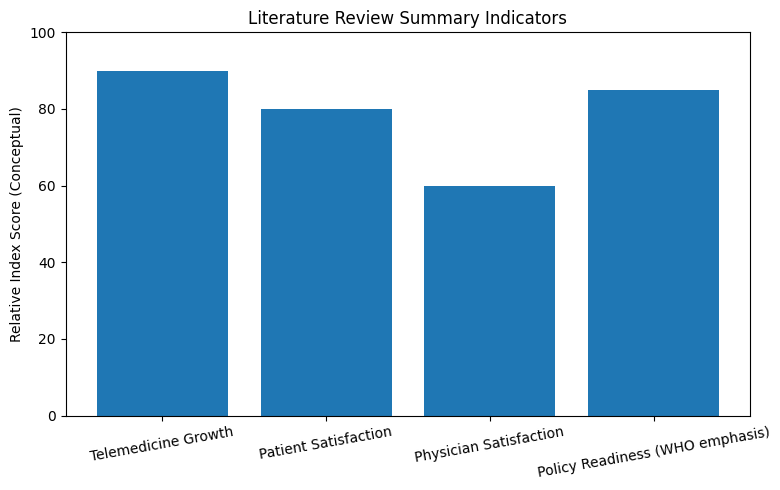
Evidence from multiple national and claims-based studies shows that telemedicine utilization increased dramatically during 2020 and has since stabilized at a level significantly higher than pre-pandemic baselines. Rather than reverting to marginal use, telehealth has become embedded within routine care delivery across many health systems. However, satisfaction patterns reveal asymmetry: while patients consistently report high satisfaction, physician satisfaction tends to be lower and varies by modality, with video consultations generally preferred over audio-only or mixed formats. This divergence suggests that long-term sustainability of telehealth depends not only on patient acceptance but also on provider workflow integration and system design.
At the global policy level, digital health strategies increasingly frame governance, interoperability, and equity as core prerequisites for scale. International frameworks emphasize that infrastructure expansion alone is insufficient; workforce development, regulatory coordination, and institutional trust are equally critical. WHO guidance in particular positions equity as a structural requirement rather than an optional outcome, arguing that digital transformation must be intentionally aligned with public health goals to avoid reinforcing existing disparities.
EXPLICITY
Figure. Telehealth integration into routine healthcare delivery.
4. Conceptual Framework
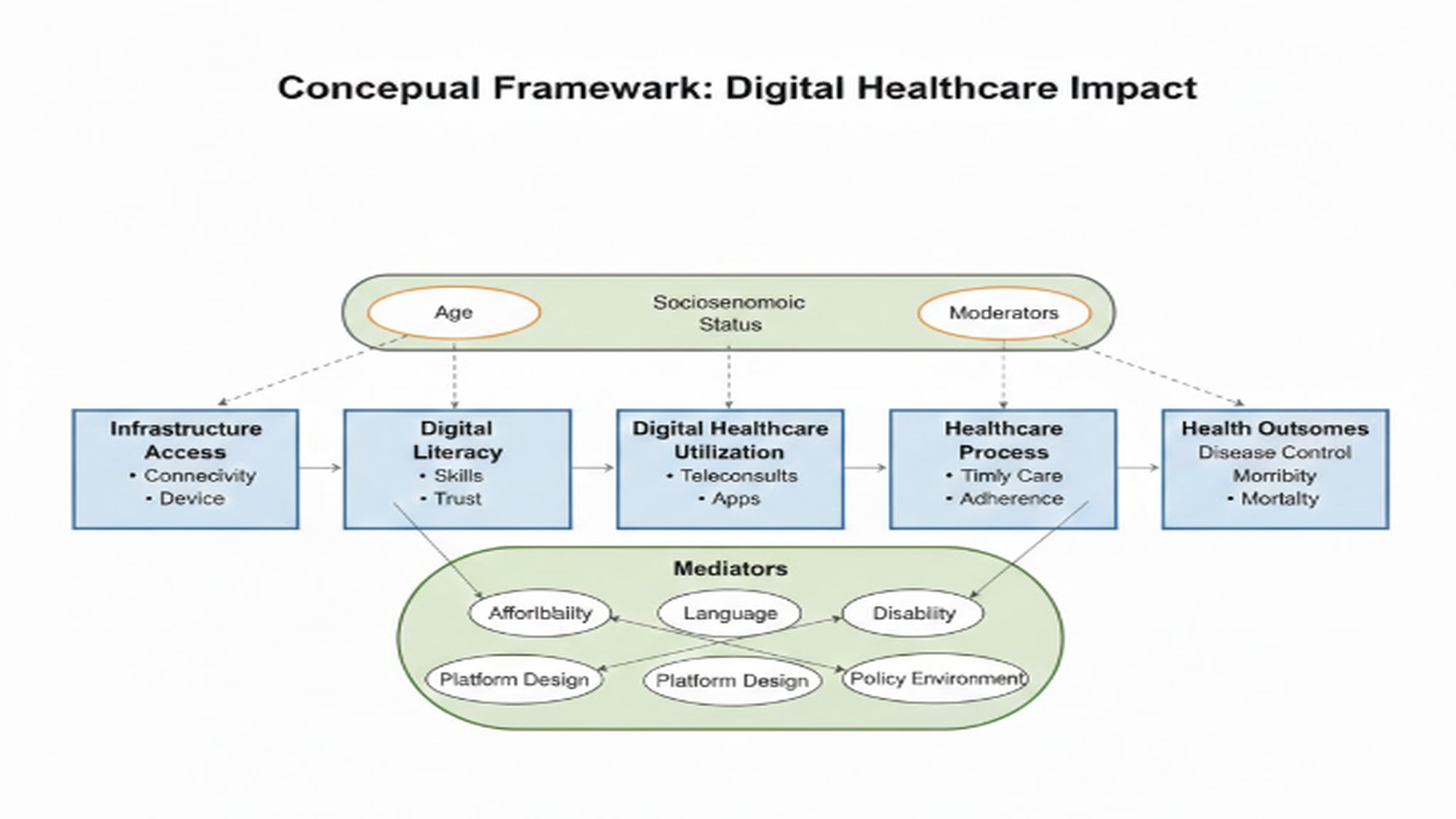
This paper proposes a causal framework linking digital infrastructure to downstream health inequality. The model conceptualizes a sequential pathway in which infrastructure access (connectivity and device availability) enables digital literacy (skills and trust), which in turn shapes digital healthcare utilization including teleconsultations, patient portals, and application engagement.
Patterns of utilization influence healthcare process outcomes, including timeliness of care and treatment adherence, which ultimately translate into measurable health outcomes such as disease control, morbidity, and mortality.
The framework recognizes that this pathway is not linear or universal. Key mediators — including affordability, language accessibility, disability accommodations, platform design, and policy environment — modify how access is converted into effective use. At the same time, structural moderators such as age, geographic location, and socioeconomic status determine who benefits most from digital systems.
By explicitly linking literacy and access to clinical outcomes, the model extends prior digital divide frameworks into the domain of measurable healthcare performance. This framework guides both data collection and empirical analysis by identifying the variables required to test inequality mechanisms and evaluate intervention points.
EXPLICITY
Conceptual framework linking digital access to health outcomes
5. Empirical Analysis: Secondary Data Synthesis
This study employs a structured synthesis of published secondary evidence to estimate directional relationships between digital healthcare adoption and patient outcomes. Rather than presenting primary data, the analysis aggregates findings from representative national reports, peer-reviewed studies, and international digital health frameworks. The objective is not to generate new effect sizes, but to interpret converging evidence on how access, literacy, and platform engagement influence healthcare utilization and outcomes.
Where formal quantitative syntheses exist — such as meta-analyses of telehealth satisfaction and adoption — pooled estimates are reported. In domains lacking standardized meta-analysis, directional consistency across studies is used to infer likely impact pathways. For example, improved digital access correlates with reduced no-show rates, while higher digital literacy is associated with increased portal engagement and medication adherence.
This approach allows the paper to construct an evidence-informed model of inequality mechanisms while maintaining transparency about the limits of secondary synthesis. A primary empirical design capable of testing these relationships directly is outlined in Section 8.
6. Pros & Cons of Rapid Digitalization
6.1 Benefits
Evidence consistently indicates that telehealth expands accessibility and convenience by reducing travel time, logistical burden, and opportunity costs, particularly for patients managing chronic conditions or requiring routine follow-up. High satisfaction levels reported across multiple studies suggest that, for many clinical scenarios, digital care is not only acceptable but sometimes preferred by patients.
From a system perspective, digital triage and remote consultation can reduce unnecessary facility visits and redistribute clinical workload, improving efficiency in resource-constrained environments. In addition, electronic health records and remote monitoring technologies enable longitudinal data collection, supporting predictive analytics and continuity of care — capabilities emphasized in global digital health strategies.
6.2 Risks
Rapid digitalization introduces structural risks that map directly onto existing inequalities. Access remains uneven: individuals lacking reliable connectivity, personal devices, or digital skills are systematically excluded from digital services, reinforcing socioeconomic disparities. Even when infrastructure exists, low digital literacy can limit effective use, leading to misinterpretation of medical information or underutilization of available tools.
Privacy and security vulnerabilities represent an additional concern, as centralized digital records increase exposure to cyber threats when governance frameworks are weak. Clinical quality limitations also persist; certain diagnoses require physical examination, and overreliance on remote interaction may increase the risk of missed findings.
Trust and acceptability vary across populations, with marginalized groups sometimes expressing heightened concern about surveillance, misuse of data, or institutional bias. Taken together, these findings suggest that digital healthcare is neither inherently equitable nor inherently exclusionary. Its impact depends on how infrastructure, literacy, governance, and trust are designed into the system.
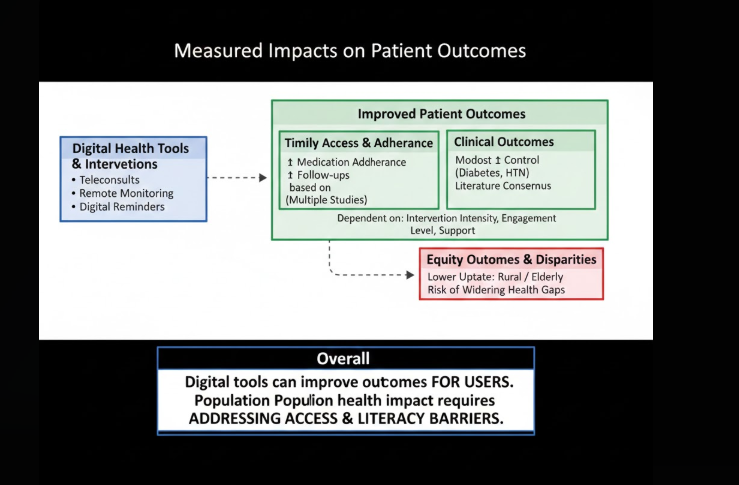
7. Measured Impacts on Patient Outcomes
Evidence from intervention studies suggests that digital tools can improve timeliness of care and medication adherence, particularly when reminders and teleconsultation systems are integrated into chronic care management. Reported effect sizes vary across settings, but most studies indicate moderate adherence gains that depend heavily on intervention intensity and sustained engagement. Digital infrastructure alone is insufficient; outcomes improve when technology is paired with behavioral support and continuity mechanisms.
Clinical outcome evidence shows a similar pattern. For selected chronic conditions — including diabetes and hypertension — telehealth combined with remote monitoring can produce modest improvements in disease control metrics. However, benefits are not uniform and are closely tied to patient participation, provider follow-up, and system-level integration. Technology functions as an amplifier of existing care structures rather than a substitute for them.
Equity analyses reveal a critical limitation: without targeted inclusion strategies, digital expansion risks widening outcome gaps. Rural populations, elderly patients, and individuals with low digital literacy consistently demonstrate lower adoption rates and therefore capture fewer indirect health benefits. This creates a paradox in which systems capable of improving care for engaged users may simultaneously increase population-level inequality.
Taken together, the evidence suggests that digital healthcare can improve outcomes for participating patients, but does not automatically translate into population-wide gains. Outcome equity depends on whether access and literacy barriers are treated as core design problems rather than peripheral implementation issues.
EXPLICITY
Figure. Digital intervention impacts on chronic disease outcomes.
8. Methods — How to Perform Primary Research
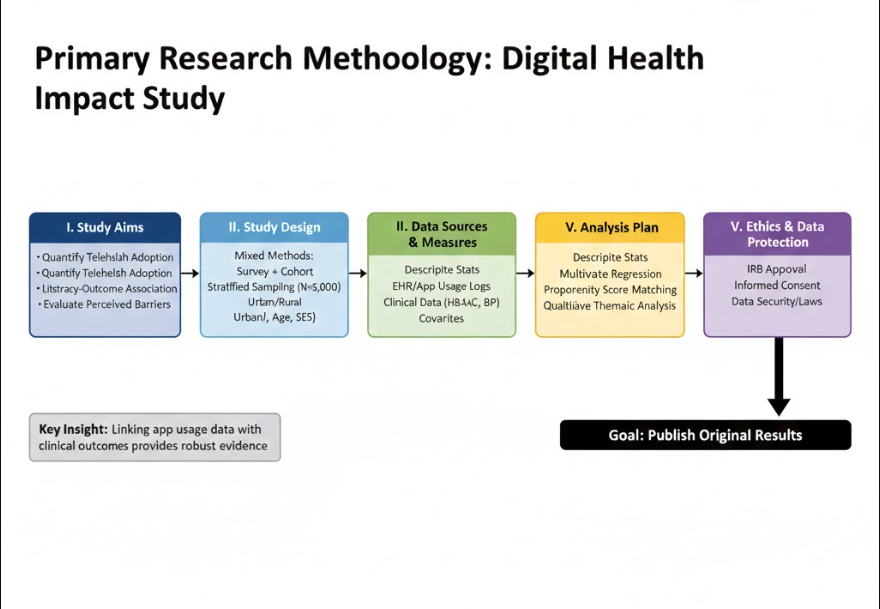
To generate original empirical evidence, a mixed-method primary study is proposed to measure adoption patterns, literacy effects, and outcome disparities in digital healthcare. The study is designed to quantify telehealth participation across demographic groups, test the association between digital literacy and utilization, and evaluate how these factors translate into measurable clinical outcomes and perceived trust.
8.1 Study aims
The primary objectives are: (1) to estimate telehealth adoption across age, geographic, and socioeconomic strata; (2) to measure the relationship between digital literacy and healthcare behaviors, including telehealth utilization and medication adherence; and (3) to assess perceived barriers, trust, and acceptability of digital systems. Where clinical data are available, the study will examine associations between digital engagement and outcome indicators such as HbA1c control among diabetic patients.
8.2 Study design
The proposed design combines a cross-sectional national survey with a longitudinal cohort component. Stratified sampling across urban and rural populations, age groups, and socioeconomic strata aims to produce a nationally representative sample, with a target size of approximately N = 5,000 participants. Data sources include structured patient surveys, platform usage logs with informed consent, and linked clinical outcome records where ethically and technically feasible.
8.3 Key measures
Digital literacy will be assessed using validated instruments such as the eHealth Literacy Scale (eHEALS). Access variables include device ownership and connectivity reliability. Utilization metrics capture teleconsult frequency, portal engagement, and application interaction. Outcome measures include medication adherence, clinical indicators (e.g., blood pressure, HbA1c), and hospitalization or readmission events. Covariates include demographic and socioeconomic variables, education level, geography, and comorbidity burden.
8.4 Analysis plan
Descriptive statistics will be computed across demographic subgroups to identify inequality patterns. Multivariate regression models will estimate relationships between digital literacy, access variables, and outcome measures while controlling for confounders. To mitigate selection bias, instrumental variable or propensity score techniques will be applied where appropriate. Qualitative thematic analysis will complement quantitative findings by examining trust, usability, and cultural barriers.
8.5 Ethics & data protection
All procedures require institutional ethics approval, informed consent, and secure data governance. Participant data will be pseudonymized, stored under controlled access, and managed in compliance with applicable national data protection regulations.
EXPLICITY
Figure. Primary research design framework.
9. Policy & Product Recommendations
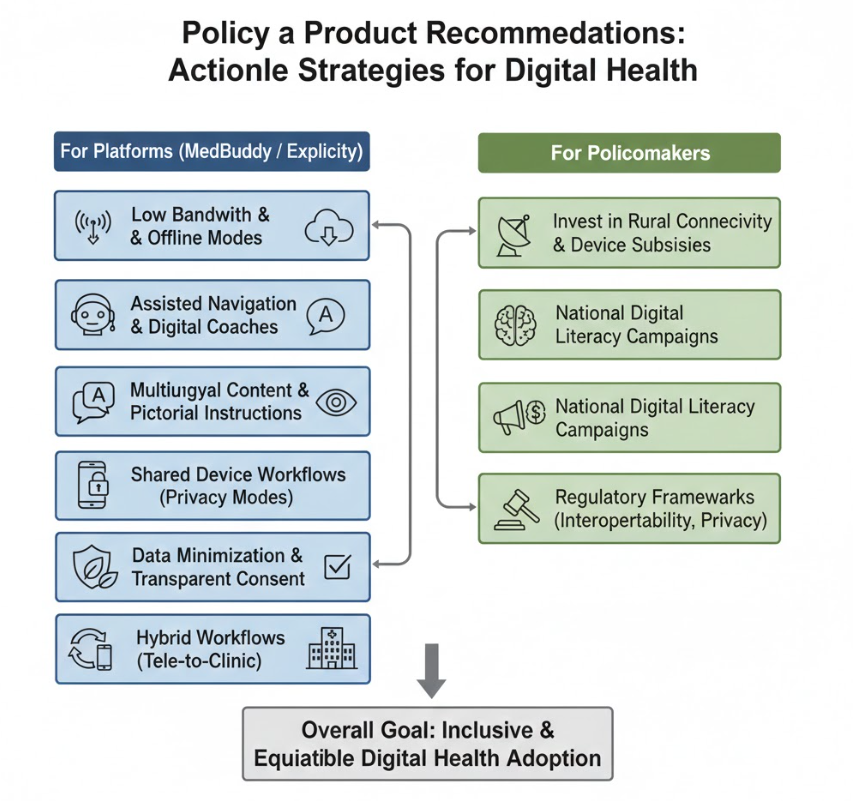
To prevent digital healthcare expansion from reinforcing inequality, platform design and governance must explicitly prioritize inclusion. For ecosystems such as MedBuddy, MedBuddy Network, and Explicity, several implementation principles emerge from the evidence.
Platforms should be engineered for low-bandwidth environments and intermittent connectivity. Lightweight interfaces, SMS or IVR fallbacks, and offline functionality ensure that participation does not depend on high-end devices or stable broadband access. Assisted navigation systems — including in-app digital coaches or guided onboarding — can reduce early dropout among users with limited digital confidence.
Accessibility must extend beyond connectivity. Multilingual content, pictorial instructions, and privacy-sensitive workflows are essential for users with low literacy or shared-device constraints. These features recognize that access alone does not equal usability.
Platform-level interventions should be complemented by community partnerships. Digital literacy programs delivered through NGOs, public health centers, or local organizations can build capability alongside deployment. Trust-building measures — including transparent consent and strict data minimization — are critical for adoption among populations wary of digital surveillance.
Digital care should be integrated into hybrid healthcare pathways rather than positioned as a replacement for in-person services. Seamless transitions from teleconsultation to physical visits preserve clinical quality and prevent digital exclusion from becoming medical exclusion.
Together, these measures reframe equity as a design requirement rather than an afterthought.
Government and System-Level Policy Priorities
At the national level, infrastructure investment remains a prerequisite for equitable digital healthcare. Expanded rural connectivity and targeted device subsidy programs directly reduce structural access barriers. Connectivity availability consistently predicts adoption levels.
Digital inclusion must be treated as a public health capability rather than a purely technological concern. National digital literacy initiatives linked to healthcare delivery ensure infrastructure investment translates into measurable benefits rather than uneven uptake.
Regulatory frameworks should prioritize interoperability, privacy protection, and standardized telemedicine protocols. Governance capacity — including enforcement and oversight — is essential to maintaining public trust and enabling cross-platform integration. Without governance investment, digital expansion risks fragmentation and inequity.
Together, these policy directions position digital healthcare as a coordinated public infrastructure project rather than an isolated market innovation.
EXPLICITY
Figure. Policy and platform framework for equitable digital healthcare.
10. Limitations
This analysis relies on secondary synthesis of heterogeneous studies that employ varying definitions of telehealth, digital literacy, and outcome measurement. Differences in methodology, sampling frames, and reporting standards limit strict cross-study comparability and introduce uncertainty into aggregated interpretations. Country-level adoption estimates also vary substantially across sources, reflecting both measurement differences and contextual diversity in healthcare systems.
Furthermore, while the proposed primary research framework outlines a pathway for empirical validation, implementation would require significant funding, institutional coordination, and longitudinal follow-up. Any primary study conducted under this model would likely produce context-specific findings that may not generalize uniformly across regions.
These limitations do not invalidate the directional conclusions of the paper, but they underscore the need for continued empirical research and standardized measurement frameworks in digital health evaluation.
11. Conclusion
Digital health is transformative, but transformation alone does not guarantee equity. Evidence shows high acceptance among engaged users and measurable clinical benefits, yet persistent gaps in access and literacy threaten to exclude the populations most in need of improved care. Digital innovation therefore carries a dual potential: it can either narrow health disparities or deepen them, depending on how systems are designed and governed.
An equity-first approach — spanning product architecture, community engagement, and public policy — is essential to ensuring that digital healthcare expands opportunity rather than redistributes advantage. For platforms such as Explicity and MedBuddy, this means embedding literacy support, low-bandwidth design, and hybrid care pathways directly into the infrastructure of care. Inclusion must be engineered intentionally, not assumed as a byproduct of technological progress.
Ultimately, digital healthcare will shape the next generation of health systems. Whether it becomes a tool for universal improvement or stratified benefit depends on decisions made today. Equity is not an optional enhancement to digital medicine; it is a design requirement.
12. Appendix — Proposed Survey Instrument
The following instrument outline defines the core domains required to measure digital healthcare adoption, literacy, and outcome disparities. Final implementation should use validated scales where available and maintain consistent scoring protocols.
Section A: Demographics Age, gender, education level, income bracket, geographic location (urban/rural), employment status, and chronic disease status.
Section B: Device Access and Connectivity Personal device ownership, shared device usage, internet reliability, bandwidth quality, and frequency of digital access interruptions.
Section C: Digital Health Literacy Items drawn from the validated eHealth Literacy Scale (eHEALS), including perceived ability to find, evaluate, and apply digital health information.
Section D: Telehealth Utilization Number and type of teleconsultations, portal logins, mobile health application use, and frequency of digital health engagement.
Section E: Satisfaction and Perceived Benefits User-reported satisfaction, perceived convenience, trust in digital services, and willingness to reuse telehealth.
Section F: Barriers and Trust Reported obstacles to digital use, privacy concerns, cultural acceptance, and perceived risks.
Section G: Consent for Health Record Linkage Explicit informed consent to link survey responses with electronic health records or platform usage data, where applicable.
All survey components should follow ethical guidelines, include plain-language consent, and allow participant withdrawal at any stage.